



The Crop Beneath Cedar Key
When fishing rules threatened a way of life in Cedar Key, locals did something remarkably practical: they learned to farm without leaving the Gulf. Their new crop simply happened to grow beneath the tide.
That history gives the Cedar Key Seafood Festival, set for October 17–18, considerably more weight than the average seafood-and-music weekend. Behind the plates of clams and oysters is a story about a working waterfront that had to rethink how people could continue making a living from the water.
During the 1990s, fishing families around Cedar Key faced increasing regulations, including oyster closures and Florida’s net ban. For a community whose identity and economy had long depended on commercial fishing, that was more than a change in technique.
Fishermen Became Farmers
The answer came from an unexpected direction.
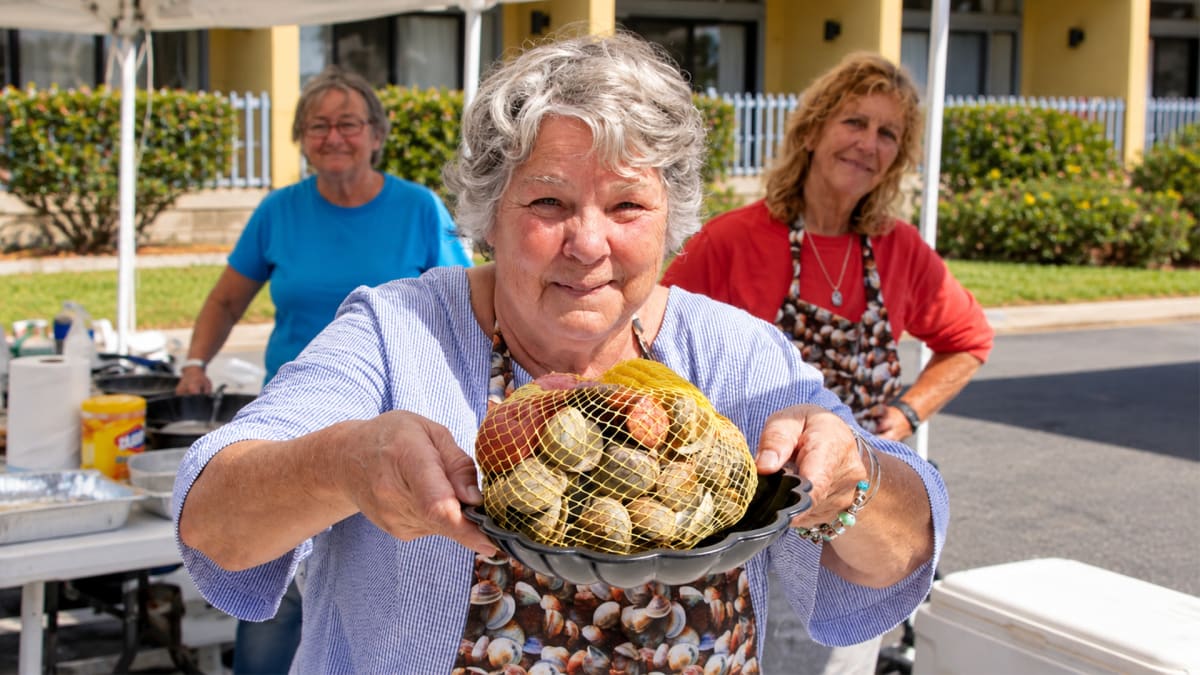
Federally funded job-retraining programs introduced former fishermen to shellfish aquaculture, according to the University of Florida’s Cedar Key Everlasting project. More than 200 participants from a four-county area learned how to culture clams, while submerged leases were identified and prepared along the Gulf Coast.
Instead of searching for wild stocks, growers began planting clam seed on leased areas of the sea floor, tending their crop underwater and harvesting it once the clams reached market size.
The job changed. The water did not.
That distinction helped Cedar Key preserve something many fishing communities lose when an industry contracts: the ability for families to remain economically connected to the same coast that had supported them for generations.
What the Festival Really Celebrates
Today, the seafood festival fills downtown streets with food, arts and crafts, music and a Saturday parade. But the more interesting celebration is sitting on the plate.
Many of those clams represent an industry that grew from economic disruption, retraining and a willingness to redefine what a fisherman could be.
That makes Cedar Key’s story especially Floridian. When one way of harvesting the Gulf became harder to sustain, residents did not simply walk away from the waterfront. They found another way to work it.
The result was farming with no fence rows, tractors or dirt beneath your boots. The fields were underwater, and the harvest still came home by boat.
Cedar Key did not leave agriculture to the mainland. It simply planted its crop beneath the tide.
For more ways to get out on Florida waters and see working coastal communities from a different angle, start with the Guide to Florida boat rental directory at https://guidetoflorida.com/boat-rental-services.