



Sleep Where History Stayed
Florida history does not always sit behind velvet ropes. Sometimes it waits beneath a chandelier, behind a carved reception desk, or in a lobby where travelers have been arriving for nearly a century.
The state’s landmark hotels preserve chapters of Florida that road widening and redevelopment might otherwise have erased. Their value reaches beyond overnight guests. A walk through one of these properties can reveal how earlier generations imagined glamour, leisure, architecture, and the still-new idea of Florida as a destination.
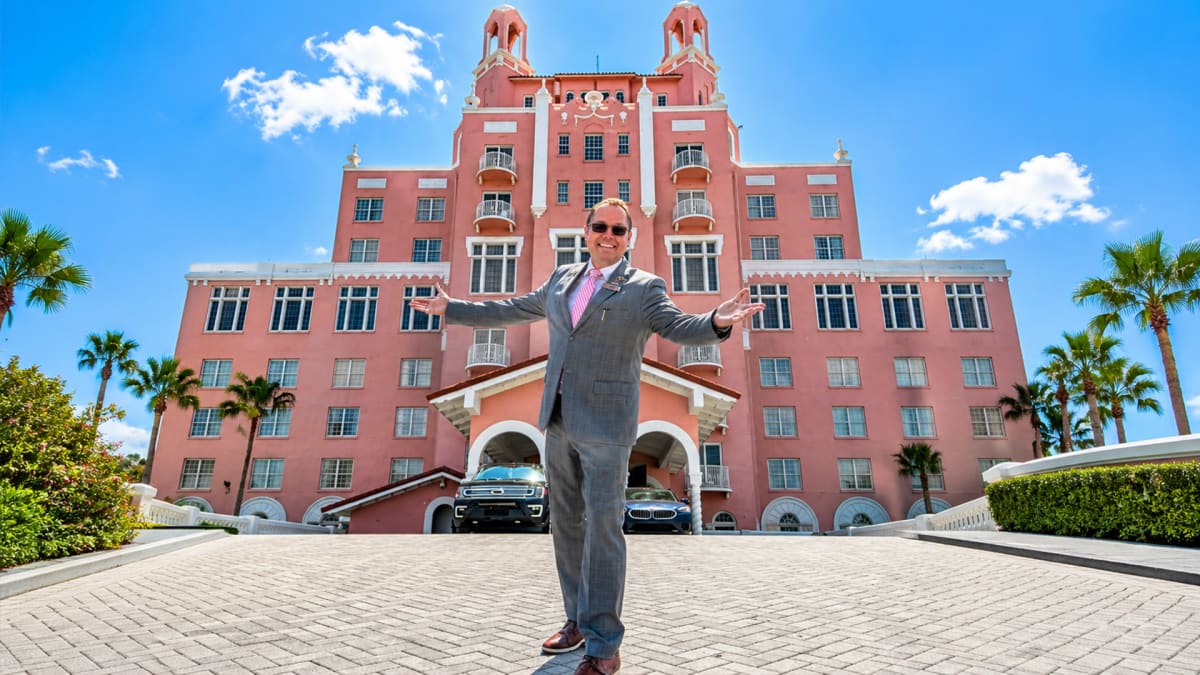
On St. Pete Beach, The Don CeSar has watched the Gulf since 1928. Its famous pink exterior is playful enough to resemble a confection, yet the building has carried a remarkably serious history through the Jazz Age, wartime use, Hollywood attention, and decades of changing beach culture. The hotel now offers history tours, giving visitors a reason to explore even when no suitcase is involved.
Across the bay, The Vinoy Resort & Golf Club reflects St. Petersburg’s grand-resort era, when Florida architecture was expected to make an entrance. Its Mediterranean Revival character remains woven into the downtown waterfront, connecting today’s St. Petersburg with the city that welcomed Jazz Age travelers arriving in linen suits and considerably less practical shoes.
Fort Lauderdale tells a more urban story through The Riverside Hotel. Opened on Las Olas Boulevard in 1936, it grew alongside the street that became one of the city’s best-known corridors. The hotel’s survival gives visitors a physical link to an earlier Fort Lauderdale, before glass towers claimed much of the skyline.
North Florida keeps its history closer to the natural landscape. Built in 1937, The Lodge at Wakulla Springs sits within Edward Ball Wakulla Springs State Park, surrounded by forest and overlooking one of the country’s largest springs. Heart cypress, marble, and careful craftsmanship give the interior the sturdy elegance of a building designed to belong there for generations.
In St. Augustine, Casa Monica Resort & Spa brings another layer to the story. Originally built in 1888, its Moorish Revival design fits a city where architecture often carries several centuries into a single afternoon. Arches, towers, rich interiors, and its Cordova Street location make the hotel part of the historic district’s visual vocabulary.
These buildings matter because history feels different when people can enter it. A preserved hotel lobby allows the past to remain useful, social, and occasionally available for lunch. Guests may come for a room, but the rest of us can still look up, wander slowly, and spend a little time with the Florida that checked in before us.
Discover more memorable Florida stays in the Guide to Florida directory: https://guidetoflorida.com/hotel-travel.