



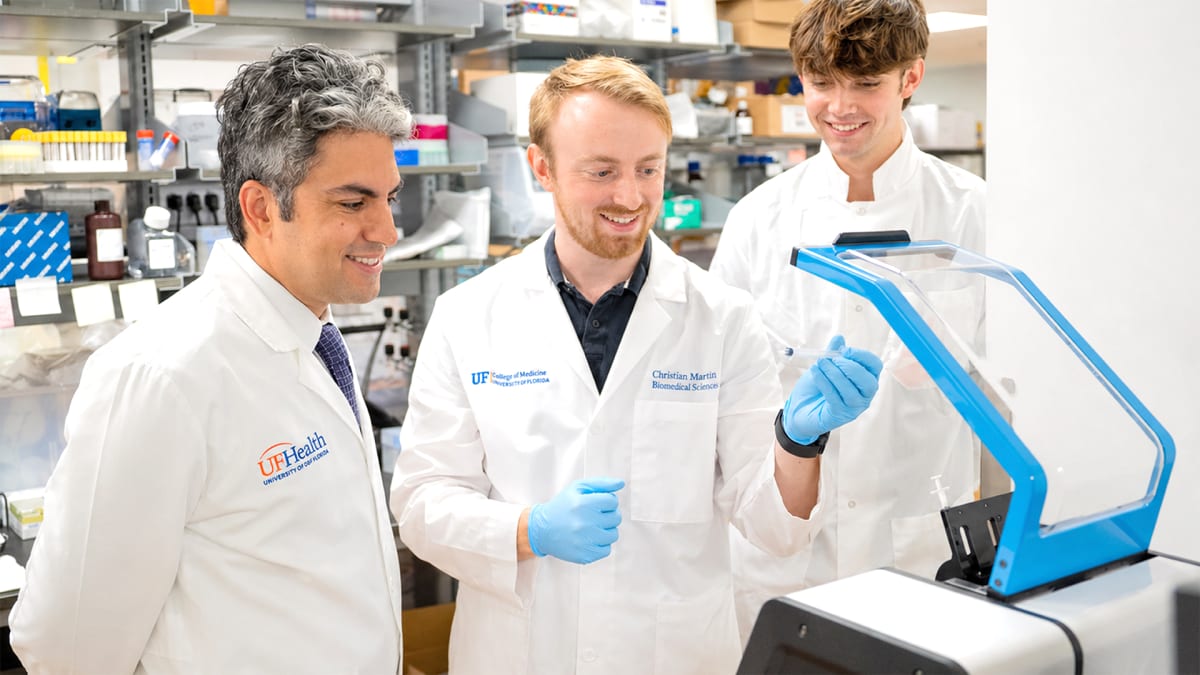
UF Funds the Future of Cancer Care
In a state better known for sunshine and shoreline, something equally powerful is taking shape behind the scenes. At the UF Health Cancer Center, a fresh round of pilot funding is quietly pushing the boundaries of how cancer is prevented, detected, and treated and doing it with a distinctly forward-thinking edge.
This year, nine research teams have been tapped to explore ideas that might still be early on paper but carry serious potential in practice. The goal is not just discovery for discovery’s sake. It is about building the kind of groundwork that turns promising theories into real options for patients across Florida and beyond.
Where Big Ideas Get Their Start
Pilot funding may sound modest, but in the research world, it is often where the most interesting work begins. These early investments give scientists the space to test bold ideas, gather data, and make the case for larger, game-changing studies.
The projects coming out of UF span a wide range, but they all share one thing in common. They are looking for smarter, earlier, and more personalized ways to tackle cancer. A few highlights include:
- AI-driven tools designed to improve HPV vaccination rates and fine-tune lung cancer care
- New approaches targeting aggressive cancers like glioblastoma and Ewing sarcoma
- Research into why some treatments stop working and how to overcome that resistance
- Studies focused on muscle wasting and the role of bacteria in cancer development
It is a mix of technology, biology, and practical problem-solving that reflects where modern medicine is headed.
A State Investing in What’s Next
What makes this initiative stand out is not just the science, but the support behind it. Backed in part by state funding, the program underscores Florida’s growing role in the national conversation around biomedical innovation. Institutions like University of Florida are increasingly becoming launchpads for ideas that ripple far beyond campus labs.
There is also a strong emphasis on collaboration. These pilot projects are designed to bring together researchers across disciplines, creating connections that often lead to faster breakthroughs and more comprehensive solutions. It is less about working in silos and more about building a network of expertise that can move the needle in meaningful ways.
For patients and families, the impact may not be immediate, but it is tangible. Every new insight, every early data set, and every successful pilot study brings the next generation of cancer care a little closer to reality.
For more on Florida’s evolving health and medical landscape, visit the directory at Guide to Florida. https://guidetoflorida.com/health-medical