



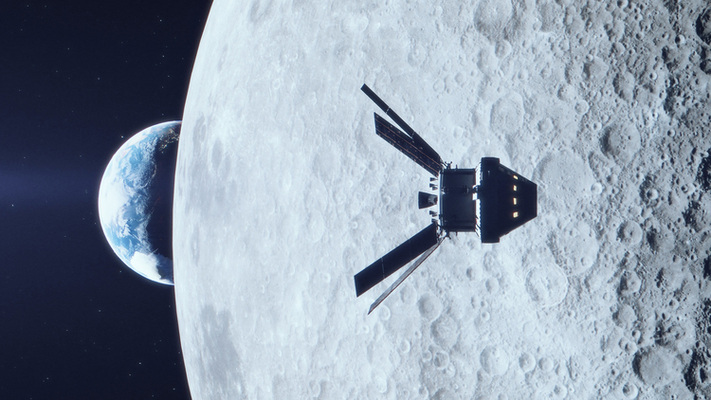
Trouble Getting Man to the Moon - Artemis 1 Launch Cancelled
The Artemis 1 launch was postponed on August 29 due to an engine bleed and unfavorable weather. The early morning Monday launch was delayed in fueling up the rocket and ultimately canceled upon discovery of a problem with a hydrogen bleed.
Man has not been on the moon since 1972 and the Artemis program hopes to send us there and beyond. Artemis 1 is an integrated test of the Orion spacecraft, the Space Launch System Rocket and the Kennedy Space Center’s ground systems. Artemis will be the first of several complex missions designed to build human presence on the Moon.
NASA’s goals for Artemis 1 include demonstrating Orion’s systems and ensuring all things run smoothly before Artemis 2 takes off with a flight crew. Orion will stay in space longer than any human spacecraft has without docking to a space station. According to NASA, Artemis “sets the stage for human exploration into deep space, where astronauts will build and begin testing the systems near the Moon needed for lunar surface missions and exploration to other destinations farther from Earth, including Mars.”
With total mission miles over 1.3 million miles, for over 42 days, the mission objectives are as follows:
Demonstrate Orion’s heat shield can withstand the return conditions of Earth’s atmosphere. At 25,000 mph and temperature up to 5,000 Fahrenheit, Orion has a pretty touch reentry. While extensive testing took place on Earth, nothing quite compares to the conditions that the heat shield will experience when returning at lunar speeds.
Demonstrate operations and facilities during all mission phases. During flight, all of the systems will need to be verified by engineers. One specific phase to pass is the pass through the Van Allen Radiation Belt. Not to mention the pressure and environment within deep space and the separation during the initial ascent.
Retrieve Orion after splashdown. The mission can only be so successful unless all of the data needed is retrieved. The information provided to engineers from the spacecraft itself is vital, including detailed inspections and the ability to reuse certain components.
Accomplish flight test objectives. Aside from its main mission, several additional objectives will be attempted in hopes of accomplishment. Certifying the navigation system, deploying CubeSats riding inside the stage adapter and collecting imagery are all on the planner.
NASA and the mission managers hope to reconvene and aim for one of the several other launch windows planned, the next earliest launch is September 2.
PHOTO / SOURCE: NASA Artemis Press Kit